

A Smarter, Cleaner Future For Growing
Peat extraction damages some of the UK’s most important natural landscapes. But many current peat-free alternatives still rely on inconsistent waste streams, imported materials, and poorly controlled inputs.
Grown-For is a new approach: compost created from renewable UK-grown willow — purpose-grown for performance, consistency, and sustainability.
Because peat free can be better than peat, in every way.

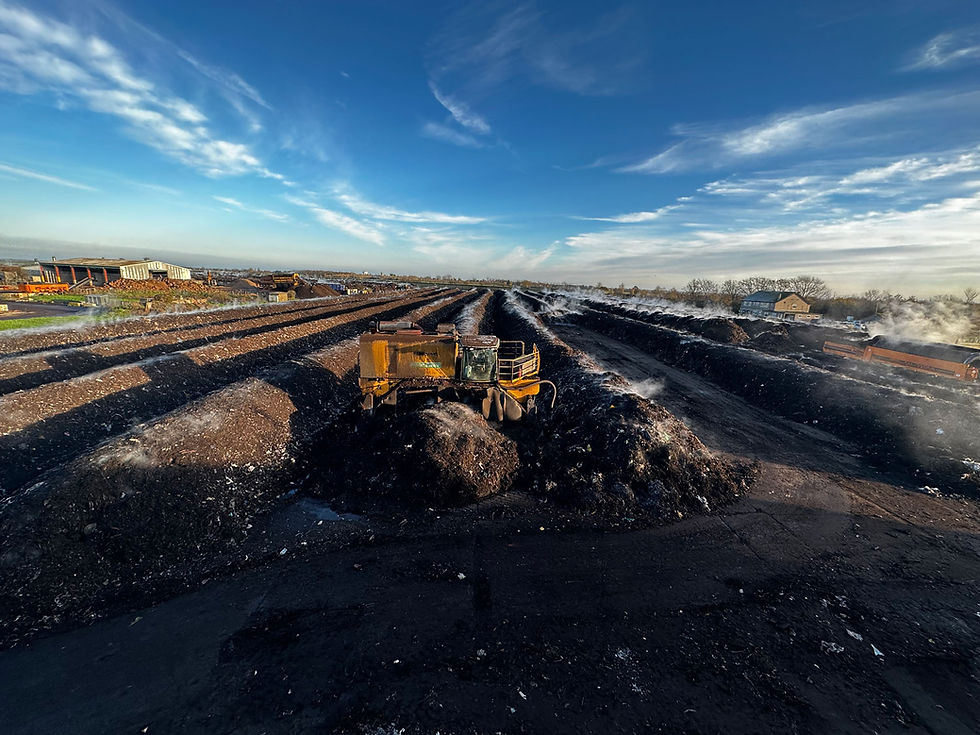
The Problem With Peat
Peat has been used in gardening for decades because it is light, reliable, and excellent at holding water and air. But peatlands are also one of the planet’s most important carbon stores.
When peat bogs are drained and extracted, oxygen enters the system and stored carbon is released into the atmosphere as CO₂. The damage doesn’t stop there — peat extraction destroys rare habitats, reduces biodiversity, damages natural water systems, and affects landscapes that took thousands of years to form.
Peat may help plants grow. But the environmental cost is too high.
3%
Peatlands cover just 3% of global land area — but store around 30% of the world’s soil carbon.
Thousands Of Years
Peat forms extremely slowly, often around 1mm per year, so landscapes can take thousands of years to recover.
Sources include IPCC 2019, Evans et al. 2014, Leifeld & Menichetti 2018.
Net Increase In Emissions
Drained peatlands release significantly more CO₂ than healthy peatlands store.
The Problem With Peat-Free
Moving away from peat is the right thing to do. But replacing peat properly is technically difficult.
Many peat-free composts rely heavily on mixed green waste streams. Those materials can vary dramatically depending on season, collection systems, and what people throw into green bins. In some cases, that can include plastics, contaminants, or even traces of pesticides.
The result can be inconsistent compost that dries out too quickly, performs unpredictably, and leaves growers frustrated.
The principles of peat-free are sound. The execution hasn’t always been.


1,100+
Microplastic particles per kg have been found in some retail compost products.
1.2kg Per Tonne
Current PAS 100 standards allow measurable plastic contamination in compost.
2mm+
UK compost standards currently only focus on visible plastics over 2mm.


A BETTER APPROACH
Grown-For is a new model for compost production.
Instead of asking “what waste materials can we use?”, we ask:
“What should we grow to make better compost?”
Across the UK, farmers already grow willow in abundance for biomass and renewable energy systems. Grown-For creates a new opportunity: working directly with UK willow growers to use renewable crops as the foundation for high-quality compost.
That means ingredients selected, grown, blended and tested specifically for growing plants — not simply repurposed from variable waste streams.
200+ Farms
A growing UK network of farms already produce SRC willow.
25–30 Years
SRC willow can remain productive for decades after planting.
3–5 Years
Willow regrows naturally after harvest without replanting and can be harvested every 3-5 years.
Why Willow?
A good compost has to do more than sound sustainable. It has to perform.
That means balancing water retention, drainage, air space, nutrition, structure and biology — consistently and reliably.
Willow offers a unique opportunity to create a better kind of peat-free compost. As a fast-growing, renewable UK crop, it can be deliberately grown, blended and tested specifically for growing plants — not simply repurposed from inconsistent waste streams.
Because willow is woody and fibrous, it also has the potential to improve moisture balance and structure within peat-free growing media. Combined with scientific testing and data-led development, the goal is simple: to create compost that growers can trust.
Because sustainability only works if performance comes with it.


Better Water Management
Woody, fibrous materials can help improve moisture balance and structure in peat-free compost.
Supports Biodiversity
SRC willow can support pollinators, birds, insects, and wildlife corridors.
Tested For Performance
Moisture, stability, germination and nutrient balance can all be monitored and refined through laboratory testing.


A NEW BRITISH GROWING MEDIA SYSTEM
Grown-For is about building a stronger domestic growing media system.
Across the UK, farmers already grow willow in abundance for biomass and renewable energy. Grown-For creates a new opportunity: working directly with UK willow growers to create purpose-grown compost ingredients that are more local, more traceable and less dependent on imported materials or inconsistent waste streams.
The old model was:
-
Extract peat or import raw materials from overseas.
-
The next generation should be different.
-
Grow renewable ingredients here.
-
Blend them properly.
-
Test them carefully.
Create better outcomes for growers, gardeners, farmers and the environment.